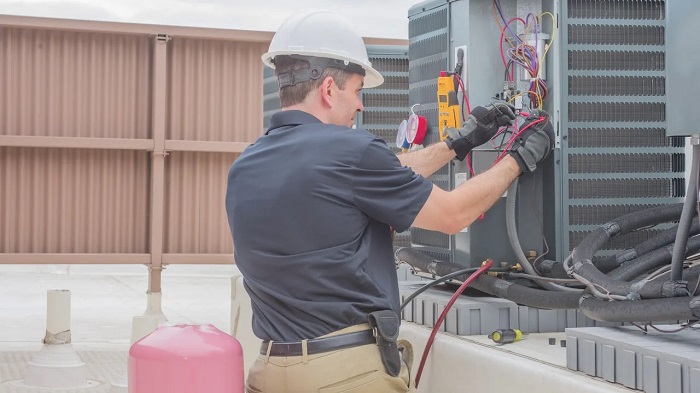
Professional air conditioning system tuning is a complex of diagnostic, measurement, and maintenance work aimed at bringing the equipment to optimal operating parameters. Unlike a one-time “plug and play” procedure, air conditioning tune up is based on precise data on pressure, temperature, air flow, electrical loads, and component condition.
The essence of the procedure is not simply “clean and check” but to ensure stable cooling, efficient energy consumption, and safe operation. That’s why professional tuning is performed according to a checklist, using pressure gauges, thermometers, a multimeter, and, if necessary, specialized software for a specific model.
Why tuning is more important than a “quick check”
An improperly tuned system can cool, but also wear out: the compressor overheats, heat transfer deteriorates, energy consumption increases, and ice and leaks develop. A professional tune-up procedure helps identify problems early that would otherwise surface during peak heat waves, when repairs are more expensive and complex.
Key Effects of Professional Tuning
- Stable Comfort: Maintains a constant temperature without sudden fluctuations or “blows cold to a single point.”
- Efficiency: Reduces unnecessary compressor starts and optimizes heat transfer.
- Extended Service Life: Reduced vibration, correct currents, and normal operating pressures.
- Safety: Early detection of burnt contacts, overheating, drainage problems, and potential leaks.
When to Perform Tuning
It’s best to perform the entire set of maintenance tasks before and after the busy season, as well as after installation, moving, repairs, extended downtime, or at the first sign of reduced efficiency. In English-speaking practice, this is often called an air conditioning tune-up.
Professional tuning is a systematic approach: measure, compare with the standard, correct deviations, and confirm the results with control parameters. This service format transforms an air conditioner from a “works until it breaks” system into a predictable engineering system that cools smoothly, quietly, and with minimal costs.
What does air conditioning tuning include: goals, parameters, and results
The ultimate goal is for the system to not simply cool or heat, but to stably maintain a preset microclimate in all zones, operate without overload or premature wear, and avoid discomfort (drafts, noise, or temperature unevenness).
Goals, controlled parameters, and expected results
The goals of tuning are to ensure that the actual system operation matches the calculation model and actual operating conditions. This includes achieving the desired microclimate, proper air exchange, stable operation, and minimizing unnecessary energy costs.
Key parameters checked and adjusted:
- Air temperature (room, supply, and return) and the stability of maintaining setpoints.
- Relative humidity (if humidification/dehumidification is enabled), correctness of control algorithms.
- Air flow rate in main lines and rooms, balancing of branches and distributors.
- Air velocity in the work area and the absence of pronounced drafts.
- Pressure/pressure drops in air ducts, fan and regulator operation.
- Refrigerant parameters (in air conditioners/VRF/chiller systems): operating pressures, superheating/subcooling, compliance with operating modes.
- Thermal performance (cooling/heating) and compliance with room loads.
- Noise and vibration, correct fastenings and rotation modes.
- Automation operation: sensors, setpoints, logic, schedules, economy modes, safety interlocks.
- Air quality (if monitored): CO?/fresh air intake, filter condition, correct mixing.
What the adjustment process typically includes:
- Verification of the equipment design/passport and the actual installation diagram, identifying discrepancies.
- Instrumental measurements of parameters at control points and recording the initial state.
- Balancing of air flows (dampers, throttles, grilles, VAV/regulators), adjustment of static pressure.
- Adjustment of temperature setpoints, modes and limits, checking the operation of sensors and actuators mechanisms.
- Monitoring the refrigeration/heating circuit and adjusting modes within the manufacturer’s requirements.
- Checking the system’s operation in various modes (partial load, peak load), assessing stability and comfort.
- Presentation of results: list of settings, measurement protocol, recommendations for operation and maintenance.
The result of professional adjustment is predictable and repeatable operation of the air conditioning system: the set temperature and humidity are maintained within acceptable tolerances, air is distributed system distributes the power evenly, the automation correctly controls the modes, and the equipment operates without overload or unnecessary energy consumption. The result is comfortable rooms, a reduced risk of accidents, and a longer system lifespan with clear and documented settings.


